
Arriving in the afternoon
Most camp stays begin with an afternoon transfer from Jaisalmer. You check in, leave your bags and head out to the dunes for sunset. Confirm the pickup time and meeting point in advance, especially if you are arriving in Jaisalmer on the same day.
Evenings in camp
Many camps host an evening of Rajasthani folk music and dance followed by dinner. The exact programme varies from camp to camp and between packages, so ask what is included rather than assuming.
Tents are not all the same
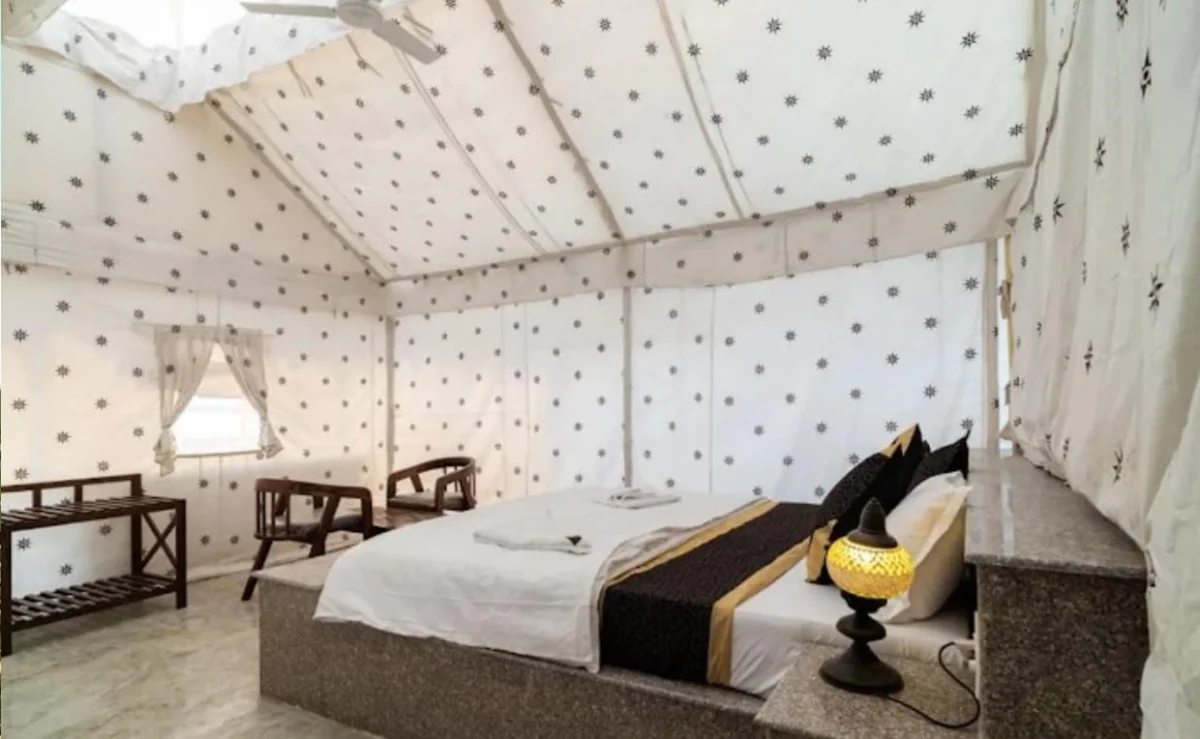
Desert camps range from simple tents to more furnished ones, and facilities such as attached bathrooms, hot water and bedding differ. Before you confirm, ask for the specific tent type and a clear list of facilities in writing.
Desert nights get cold
Even after a warm day, temperatures in the desert drop quickly after dark. In December and January nights can approach freezing. Pack a warm jacket, socks and a hat, and keep a torch or phone light handy for walking around camp.
Morning and the drive back
Wake early if you want to see the sunrise over the dunes. After breakfast, if included, most guests drive back to Jaisalmer in the morning. Plan onward trains or flights for later in the day to avoid rushing.
A detailed packing list
Pack light: you only need one night's things, and the rest of your luggage can stay at your hotel or in the car if arranged. Bring a warm jacket, a hat and socks for the night; a scarf and sunglasses for the dunes; sunscreen and lip balm; a torch or headlamp; a power bank; any medication; a small towel; wet wipes; and a refillable water bottle. Sandals or shoes that are easy to empty of sand are better than laced trainers. Keep valuables to a minimum.
Sleeping well in the desert
Desert camps are generally quiet after the evening programme ends, but sounds carry across the sand. Earplugs help light sleepers. Nights can be much colder than you expect, particularly in December and January, so ask for extra blankets if you need them. If you plan to be up for sunrise, go to bed early; the desert morning comes quickly.
Food at camp
Where meals are part of your package, dinner is often a Rajasthani vegetarian meal served after the evening programme, with breakfast the next morning. If you have allergies, follow a specific diet or need milder food for children, let us know when booking so we can check with the camp. Carry some snacks if you tend to get hungry between meals, as there may be few shops nearby.
Watching the night sky
On clear nights away from city lights, the desert sky can be remarkable. Walk a short distance from the camp lights, give your eyes 15 to 20 minutes to adjust, and use your phone's red-light or low-brightness setting. Around the new moon, the sky is darkest; around the full moon, the dunes are bright enough to walk on without a torch. Both are memorable in different ways.
One night or two?
One night is enough for most travellers to experience sunset, an evening in camp and sunrise. A second night allows a slower pace: a longer ride, time to read or walk on the dunes without a schedule, and a chance to see the desert at midday, when it is quiet and still. If you are visiting in the hot months, one night is usually plenty. Tell us how you like to travel and we will suggest the right length.
Choosing when to go
The most popular time for a camp stay is from October to March, when days are comfortable and nights are cool to cold. December and January bring the coldest nights, so pack accordingly. From April to June, evenings are warm and days are very hot; if you visit then, choose a late-afternoon arrival and ask about cooling in the tent. During the monsoon months, occasional rain is possible, and the landscape can briefly turn green.
Travelling to the camp
Most camps near Sam are around an hour's drive from Jaisalmer. The drive passes open scrubland and small villages, and many travellers stop at Kuldhara on the way. If you book transport with us, your driver will know the camp location and timing. If you are driving yourself, confirm the exact location in advance, as camps can be hard to find after dark.
Evening programme etiquette
Performers at the evening programme are often from families with a long musical tradition. Listen during songs, ask before filming performers close up, and join in if invited to dance, only if you want to. Tipping performers is customary but always at your discretion.
Health and comfort
The desert air is dry, so drink plenty of water and carry lip balm and moisturiser. If you are sensitive to dust, bring a mask or scarf. Keep any medication with you rather than in the car, and tell us about medical conditions when booking so we can advise on suitable options.
Making memories without rushing
The best moments at a desert camp are often the quiet ones: the silence after the music ends, the sky filling with stars, the first light on the dunes. Leave room in your schedule for them. Put your phone away for a while, sit on the sand, and let the evening unfold at its own pace.
Understanding tent types
Camps near Jaisalmer use a range of tent styles. Some are simple canvas tents with basic bedding and shared bathrooms nearby. Others are larger, more furnished tents with a proper bed, furniture and an attached bathroom. Names used to describe tents vary between camps, so it is better to ask exactly what a tent includes than to rely on a label. We confirm the tent type and facilities in writing before you book.
Travelling solo to a camp
Solo travellers can enjoy a desert camp as much as anyone. The evening programme and shared dinner are sociable, and many camps are happy to host single guests. Share your plans with someone you trust, keep your phone charged, and confirm your pickup and return arrangements in advance. If you would prefer company, ask whether any shared options are available on your dates.
Camps and children
Children tend to love the space of the dunes and the novelty of sleeping in a tent. For younger children, choose a camp with an attached bathroom, pack a favourite blanket or toy for the unfamiliar setting, and plan an early night. A short camel ride and time to play in the sand are usually more enjoyable for them than a long ride.
What we confirm before your stay
Before a camp stay, we confirm the camp, tent type, inclusions, check-in and check-out times, and transport. You receive this in writing, along with the contact number you need on the day. If anything changes, such as a delayed arrival, tell us and we will coordinate with the camp.
Common first-night surprises
First-time guests are often surprised by how quickly the temperature drops after sunset, how bright the stars are, and how quiet the desert becomes once the music stops. Some are surprised by sand in everything: shoes, bags and sometimes bedding. Others are surprised by how early they wake up, drawn out by the light. Knowing this in advance helps: pack warm layers, keep your bag zipped, and set an alarm for sunrise anyway.
Respecting the desert and the people who live there
Desert camps sit within a landscape that local communities have lived in for generations. Keep noise down late at night, take your litter back with you, and avoid wandering into private land or village areas without permission. Treat camp staff and performers with courtesy. A respectful guest helps keep this experience possible for future visitors.
Is a desert camp right for you?
A camp night suits travellers who enjoy the outdoors, are comfortable with simple or semi-furnished accommodation, and want to experience the desert after dark. If you prefer hotel comforts, a sunset safari with a return to Jaisalmer may suit you better. Both are valid choices. Tell us what you are comfortable with and we will help you decide.
Next steps
To plan a camp stay, send us your dates, the number of guests and any preferences, such as an attached bathroom or a quieter location. We will suggest options and confirm the details in writing. See the desert camp page for more on what a stay involves, or the tour packages page for itineraries that combine a camp night with city sightseeing.