Half-day or overnight?
A half-day safari leaves Jaisalmer in the afternoon, includes a ride and sunset on the dunes, and returns you to the city in the evening. It suits travellers with limited time or those who prefer their hotel bed. An overnight safari adds an evening in camp and a sunrise on the dunes. If you can spare the extra night, the quieter morning is often the part people remember.
Riding a camel: practical tips
Camels kneel for you to climb on. When the camel stands, it rises back legs first, so lean back and hold the saddle handle firmly; then lean forward as the front legs straighten. Long, loose trousers are more comfortable than shorts. Keep your bag small and secure. Your handler walks alongside or leads the camel, so tell them if you want to slow down, stop for photos or get off.
Jeep safari: what to expect
A jeep safari climbs and descends dunes at speed, and the ride is bumpy. Hold on, keep loose items secure and wear sunglasses against blowing sand. If you would like a gentler ride, ask the driver to go slower. Jeep safaris are not recommended for anyone with back or neck problems, recent injuries or a pregnancy.
Photography on the dunes
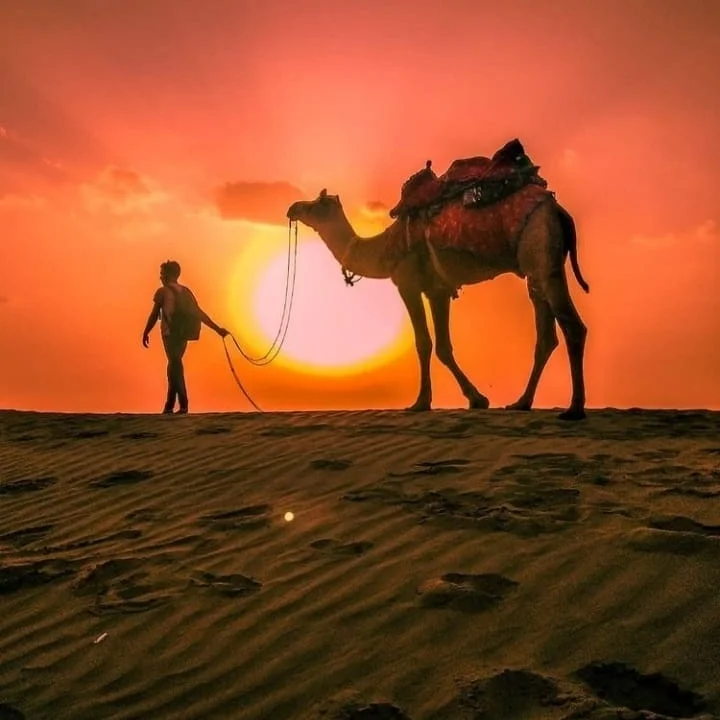
The best light is in the hour before sunset and just after sunrise, when the dunes glow and ripples in the sand show clearly. Sand is hard on cameras, so change lenses inside a bag or not at all, and carry a cloth to wipe your phone. Undisturbed sand photographs better, so walk a little away from the busy areas. Silhouettes of camels against the sunset are easiest if you shoot toward the light and expose for the sky.
Travelling with children or older relatives
Short camel rides are popular with children, and younger ones can often ride with a parent. For older travellers, a sunset visit without riding, or a short ride, may be more comfortable. Walking on soft sand is tiring, so plan for rests. Tell us about ages and mobility and we will suggest the right format.
Respecting animals and the desert
Camels are working animals. Let your handler guide the pace, avoid feeding them anything unless the handler agrees, and do not pressure anyone to push an animal harder. On the dunes, take your rubbish with you and avoid disturbing desert plants, which grow slowly in this climate.
Combining a safari with other plans
A safari fits easily with a morning of city sightseeing, a stop at Kuldhara on the way out, or a camp night. See our tour packages for combined itineraries.
Morning safaris
Most visitors think of safaris at sunset, but mornings have their own appeal. The dunes are cool, the sand is marked only by the tracks of small animals and birds, and there are fewer people around. A morning ride works especially well after a night at camp or in the hot months, when afternoons are uncomfortable.
If you would like a morning safari from Jaisalmer, expect an early start to reach the dunes around sunrise.
What to wear
Light, loose, long clothing protects against sun and sand and is more comfortable on a camel saddle. Cotton or linen works well. Bring a scarf that can cover your nose and mouth if the wind picks up, and a warm layer for after sunset in winter. Closed sandals or shoes that slip off easily are practical on soft sand.
Wind and dust
Afternoons can be windy, particularly in spring and early summer, and blowing sand gets into everything. Keep phones and cameras in a zipped bag when not in use, wear sunglasses, and wrap a scarf around your face if needed. On very windy days, rides may be shortened for comfort.
The cultural evening in more detail
Rajasthan's desert communities have a rich tradition of folk music. At a cultural evening you may hear singers accompanied by instruments such as the dholak, a hand drum, and the kamaicha or sarangi, bowed string instruments, and see dancers performing styles associated with the region.
Programmes vary between camps, so we tell you what to expect when you book. Guests are sometimes invited to join the dancing at the end; it is entirely up to you.
Booking for a group
For groups, the number of camels or jeeps needed affects timing, so it helps to confirm numbers early. Groups can ride together or split between camel and jeep, meeting at the same sunset point. Tell us who in the group wants to ride and who would rather watch, and we will plan accordingly.
If the weather changes
Dust storms and rain are uncommon but possible. If conditions make a safari unsafe or unpleasant, we will discuss options with you, such as changing the time or date. Your safety and comfort come first.
Timing your safari with the sunset
Sunset over the dunes varies through the year, from late afternoon in December to early evening in June. Plan to arrive at the dunes at least an hour before sunset, which gives time for the ride and a few minutes to settle at a viewpoint. We confirm the right departure time from Jaisalmer based on your date.
If you would rather avoid the busiest sunset spots, ask for a longer camel ride to a quieter part of the dunes, or consider a morning safari instead.
Safaris as part of a longer trip
If Jaisalmer is one stop on a longer journey through Rajasthan, a safari is often the highlight. We can arrange it to fit around your arrival and departure, including a drop to the station or onward drive after an overnight camp stay.
Frequently overlooked details
A few small things make a safari more comfortable. Use the bathroom before leaving the city, since facilities at the dunes are limited. Keep a small amount of cash for tips and refreshments. Charge your phone fully and bring a power bank if you plan to take many photos. Tie back long hair and secure hats with a strap or clip, as the wind on the dunes can be strong.
Finally, give yourself time. Rushing to fit a safari between other plans takes away from the experience; the dunes are at their best when you can linger after sunset.
Safaris in the shoulder seasons
October and March are good months for a safari: the days are warm but not extreme, and the peak-season crowds are thinner. Evenings are pleasant for sitting on the dunes after sunset. If your dates are flexible, these months offer a comfortable balance of weather and availability.