
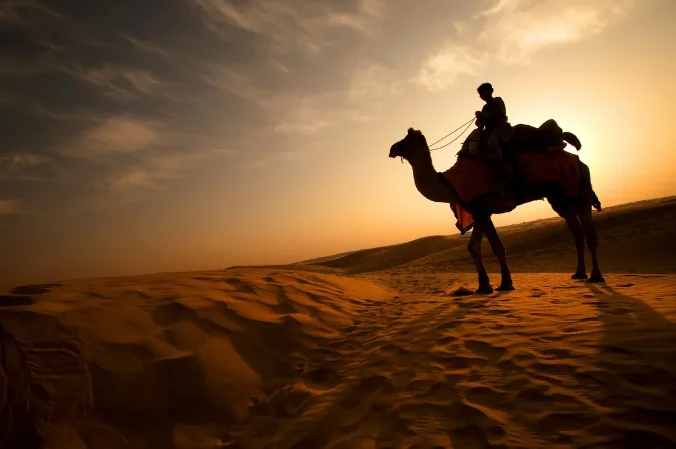
Camel or jeep: choosing the pace
A camel ride is slow and quiet, which suits travellers who want to take in the dunes at walking pace and stop for photographs. A jeep safari covers more ground and is more of a ride, with climbs and drops over the sand. Dune driving is bumpy, so a jeep is not the best choice for anyone with back problems, recent injuries or a pregnancy. Many visitors do a short camel ride and then watch the sunset from the dunes.
Sunset or early morning
Most safaris are timed for the late afternoon so you reach the dunes before sunset, when the light is softest and the sand turns orange. Early mornings are cooler and quieter and work well in the hotter months or after a night at a desert camp. The Sam Sand Dunes are roughly 40 km west of Jaisalmer, so allow travel time in each direction.
The best months to go
October to March is the most comfortable season, with warm days and cool evenings. December and January nights can be very cold in the open desert. From April to June daytime temperatures are extreme, and rides are best kept to early morning or evening. Brief monsoon showers are possible in July and August.
What to bring
Carry sunglasses, sunscreen and a scarf or cap to keep sand and sun off your face. Shoes or sandals that are easy to empty are better than trainers full of sand. Bring drinking water, a warm layer for winter evenings, a small bag for your phone and camera, and a photo ID.
Combining a safari with a camp night
A safari fits naturally into an overnight desert camp stay: ride in the afternoon, watch the sunset, spend the evening in camp and see the sunrise before driving back. If you are short on time, an evening safari with a return to Jaisalmer the same night is also possible.
A typical safari afternoon
In winter, most half-day safaris leave Jaisalmer in the early afternoon. The drive west takes around an hour, often with a short stop at Kuldhara. On arrival you meet your camel handler or jeep driver and head into the dunes. A camel ride of 30 minutes to an hour brings you to a spot to watch the sunset; a jeep covers more ground in the same time. After the sun goes down, the air cools quickly. You either return to Jaisalmer, arriving in the evening, or continue to a desert camp for the night. In summer, the whole schedule shifts later to avoid the heat.
Staying safe in the heat and on the sand
The desert is hotter and drier than it feels. Drink water regularly, even if you are not thirsty, and keep your head covered. Stay with your handler or driver, as dunes look alike and it is easy to lose your bearings, especially after dark. If you feel dizzy or unwell, stop and find shade. Tell us in advance about any medical conditions, and carry any medication you need. Sunset points can get busy in peak season; keep an eye on children and belongings.
What to look for in camel care
Camels are central to desert life and tourism here. A well-cared-for camel looks alert, has a clean saddle that fits properly and is not visibly injured. Handlers should let camels rest between rides and give them water. If you notice something that concerns you, tell us. Choosing a responsible operator and not asking for longer or faster rides than the animal can manage helps keep this tradition sustainable.
How to judge the right ride length
Short rides of around half an hour suit first-timers, children and anyone unsure how they will find it. Longer rides let you get further from the busy areas and are better for photographs, but the saddle can be uncomfortable after an hour or two if you are not used to it. If you are combining a ride with a camp night, a moderate ride in the afternoon and a short walk on the dunes at sunrise is a good balance. Tell us what you want and we will plan the ride length accordingly.
What affects the cost of a safari
The main factors are the type of safari, the length of the ride, the number of people and whether transport from Jaisalmer is included. Adding a camp night, meals or an evening programme changes the total, as does travelling in peak season. When you compare quotes, check exactly what each one includes so you are comparing like for like. Our quotes list the inclusions in writing.
Sam or Khuri for your safari
Both Sam and Khuri offer camel and jeep safaris. Sam is closer to Jaisalmer, larger and busier, especially around sunset in the winter months. It has the most options for camps and rides. Khuri is further south-west and has a quieter, village setting with smaller dunes. If you want atmosphere and choice, Sam suits you; if you want calm, ask about Khuri. Either way, the experience of watching the sun go down over the sand is similar, and we can arrange transport to both.
Safaris for different kinds of travellers
Couples often choose a longer camel ride to reach a quieter spot for sunset. Families with young children usually prefer a short ride followed by time to play on the dunes. Groups of friends sometimes combine a jeep ride for the thrill with a camel ride for the photographs. Older travellers may prefer to be driven to a sunset point and skip riding altogether. There is no single right way to do it, and we plan around your group.
Booking in advance versus on the spot
It is possible to arrange a safari after arriving in Jaisalmer, especially outside peak season. Booking ahead, though, lets you confirm timings, transport and inclusions in writing and avoids negotiating on the day. In the busy months from November to February, and around holidays and the Desert Festival, advance booking also helps secure your preferred camp or time slot.
Photography tips specific to safaris
On a camel, keep your camera strap around your neck or wrist; the gait is rocking, and dropped phones disappear into sand. Shoot from the saddle as the caravan moves in a line, then ask your handler to stop so you can photograph from the ground. For silhouettes, position yourself so the camels are between you and the setting sun. On a jeep, wait until the vehicle stops before taking photos.
Questions to ask before you book
Before confirming any safari, ask how long the ride is, whether transport from Jaisalmer is included, where the sunset point is and how busy it is likely to be, whether the safari can be combined with a camp night, and what happens if the weather is poor. Clear answers help you compare options fairly and avoid misunderstandings on the day.
A safari checklist for the day
Before you leave your hotel, check that you have water, sun protection, a scarf, a warm layer if it is winter, your phone and a power bank, some cash and a photo ID. Confirm your pickup time and the name of your driver. If you are staying at a camp afterwards, pack only what you need for one night in a small bag. With these basics covered, you can relax and enjoy the afternoon without worrying about what you forgot.
After the safari
If you are returning to Jaisalmer, you will arrive back in the evening, often tired and a little sandy. Plan a simple dinner near your hotel. If you are staying overnight at a camp, the evening programme and dinner follow the sunset. Either way, shake out your shoes and bags before packing them, and give your camera or phone a careful wipe to remove any sand.
Common mistakes to avoid
The most common mistake is leaving Jaisalmer too late and arriving at the dunes just as the sun sets, with no time to ride or settle. The second is underestimating how cold the desert gets after dark in winter. The third is booking without confirming what is included, then finding that transport or the ride itself costs extra. A little planning avoids all three: leave early, pack a warm layer and get a written quote.
Is a safari worth it?
For most visitors, yes. Even a short camel ride or a sunset walk on the dunes gives a sense of the scale and silence of the Thar that is hard to get from the city. If you have limited time, a half-day safari is enough. If you can stay overnight, the evening and sunrise add a quieter, more personal side to the experience.